One of the most common pieces of advice given to CEOs on LinkedIn is to “be more personal.”
The intention is good.
People want to hear from leaders, not corporate communication departments. They want authenticity, perspective, and insight. But somewhere along the way, many leaders started interpreting “personal” as “private.”
As a result, LinkedIn has become filled with posts about morning routines, childhood memories, life lessons from family vacations, and stories that have little connection to the leader’s role or expertise.
For most CEOs, that’s not the answer. The goal is not to communicate more privately. The goal is to communicate with more personality.
Personality Creates Connection
The most effective leaders on LinkedIn don’t hide behind corporate language.
They have a point of view and they share observations important for their company or their business. They express opinions – maybe even about society. They communicate with a tone and style that feels recognisably human.
That’s personality. And personality is often what makes stakeholders stop scrolling and start paying attention.
Corporate Topics Don’t Have to Sound Corporate
Many CEOs assume that business topics automatically must be communicated in a formal and impersonal way.
In reality, even highly corporate subjects can become engaging when leaders add their own perspective.
A strategy update can include a reflection. The topic remains business-related.
The communication becomes more human. That’s often where credibility is built.
The Danger of Forced Authenticity
The pressure to be authentic has created a new challenge for executive communication.
In some cases, leaders end up sharing personal stories simply because they believe that’s what performs well on LinkedIn.
The problem is that audiences are remarkably good at spotting content that feels forced.
Authenticity isn’t about revealing more of your private life.
It’s about communicating in a way that genuinely reflects who you are as a leader.
For most CEOs, stakeholders are far more interested in their thinking than in their personal routines.
A Strong Example of Balance
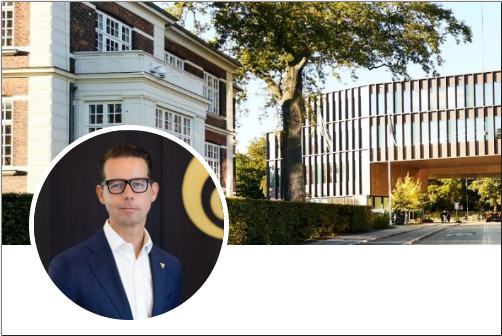
One leader who consistently demonstrates this balance is Jacob Aarup-Andersen.
As CEO of Carlsberg Group, he communicates about strategy, business performance, leadership, and organisational priorities.
The topics are relevant to the business. But the communication never feels like a corporate press release.
Instead, he brings perspective, reflection, and personality to the conversation while maintaining the professionalism expected of a global CEO.
That balance is difficult to achieve, but it is often what separates effective executive communication from ordinary corporate content.
The Best CEO Communication Feels Human
LinkedIn does not require CEOs to choose between being professional and being authentic.
The strongest leaders manage to be both. They communicate about topics that matter to their organisation and stakeholders while allowing their personality to come through in how they communicate.
Not through oversharing and not through private stories for the sake of engagement. But through genuine perspectives, reflections, and opinions.